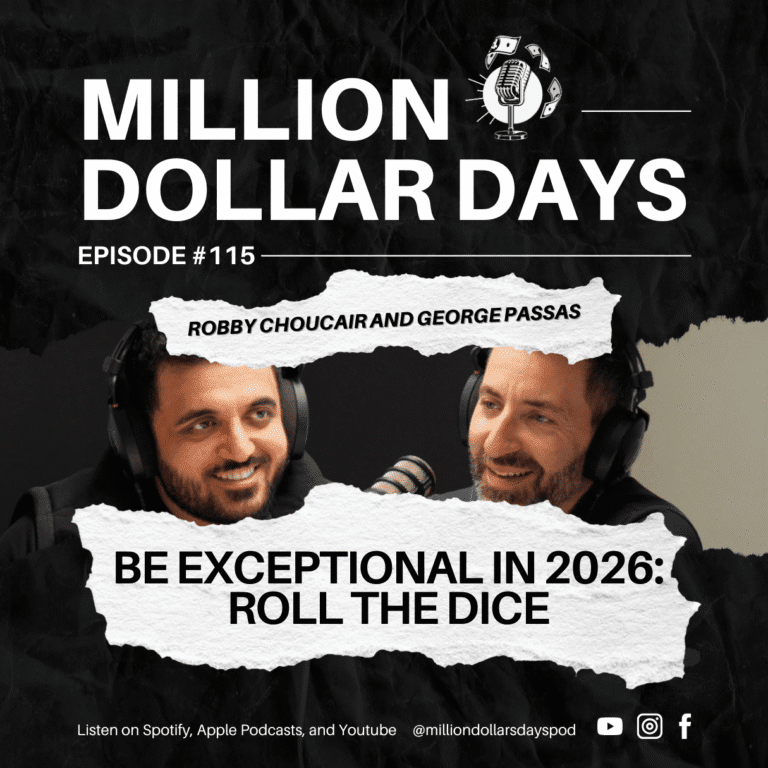
The first week of 2026 brings a clean slate and a hard question: are we choosing comfort or courage? We talk through what it means to set a word of the year that actually changes behavior, landing on “exceptional” as a standard, not a slogan. That shift reframes goals into non-negotiables: finishing what we start, acting faster, and refusing the subtle praise that lulls us into average. The goal isn’t hype; it’s clarity. When we remove wiggle room—whether that’s committing to a $10M project or a six-pack—we stop bargaining with ourselves and start executing like it already belongs to us. Standards rise, identity follows, and results catch up.
A core theme is the danger of comfort. The leap from zero to podcasting felt huge once, then it became normal. That’s how plateaus form: yesterday’s stretch becomes today’s baseline, and we confuse momentum with movement. We separate observation from toxic comparison: you can admire a big player’s scale without resenting your lane. The test is whether seeing someone else’s success makes you smaller or sharper. If it inspires strategic questions—what’s the next constraint, what’s the system I’m missing, who already solved this—then it’s fuel. If it steals your joy, it’s a distraction. We keep our eyes open and our emotions tethered to our effort, not someone else’s highlight reel.
Risk shows up next, not as recklessness, but as calibrated courage. We revisit stories of operators who grew during downturns, bought when others froze, and learned to fire fast and hire faster. Bravery only exists where fear lives; otherwise it’s routine. That’s why “roll the dice” is less a dare and more a design: take on projects that scare you, investments that stretch your ability, and content outputs that outpace your comfort. The mind quits before the body does—so we practice winning small battles daily: the last two reps, the extra call, the second draft, the awkward pitch. Those micro-braveries compound into macro breakthroughs.
Discipline outruns motivation because motivation is weather; discipline is architecture. We unpack how to build the scaffolding: fixed blocks on the calendar, strict cutoffs on decisions, and simple personal rules that remove arguments with yourself. No snooze. No half-finished. No “later.” When fatigue hits, rules do the heavy lifting. This applies to money too: think in portfolios and pipelines, not single clients. One default isn’t a crisis if you have 200 accounts and a process for collections. Strategic generosity with partners—eating a small cost to win long-term trust—often beats being “right” on paper but losing deal flow in practice. Play the multi-move game.
Resilience is a muscle trained by exposure. What once would have wrecked us—a missed $15k, a delayed payment, a blown line item—becomes a shrug as stakes rise. The aim isn’t to eliminate hard days; it’s to recover faster and keep your home life clean from the shrapnel. Perspective matters here. Gratitude, even if you’re skeptical of the trend, reframes problems as privileges. You’re alive, capable, and one decision away from a different trajectory. That one decision might be a book that supplies a missing lens, a mentor who cuts the learning curve, or a habit that upgrades your baseline. The path to “exceptional” isn’t mystical; it’s a stack of choices made without excuses.
Finally, we commit to bigger rooms and sharper ideas—inviting guests with different views to test our beliefs. Growth requires frictions: new markets, new formats, and conversations that make you uncomfortable in the best way. The checklist for 2026 is blunt: pick a word that forces action, design rules that endure bad days, take a risk that scares you, and measure your week by decisions shipped. Praise less. Standards more. Roll the dice, then earn the roll.