
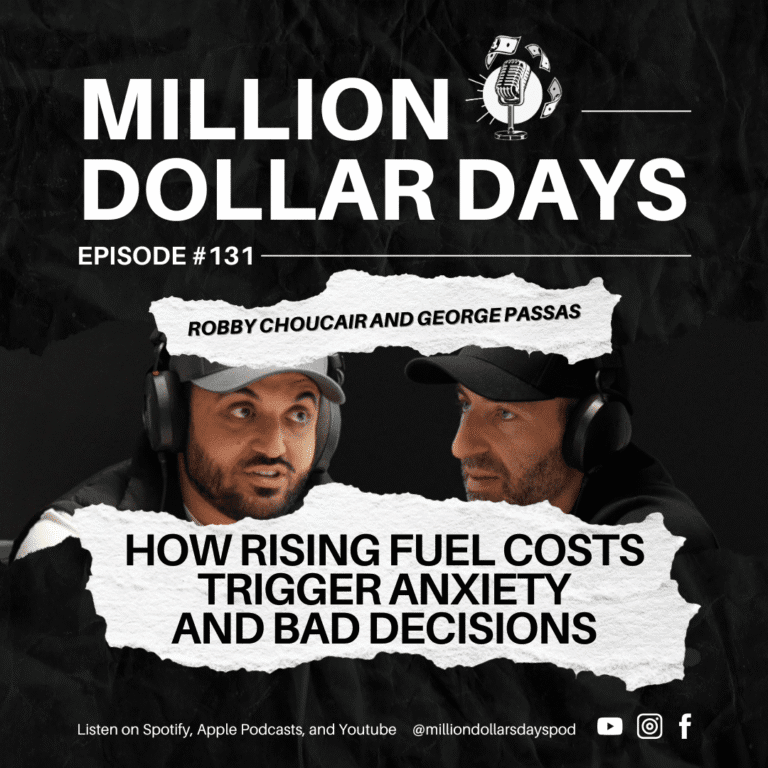
Fuel prices and fuel supply fears have a way of hijacking the whole conversation fast. When people start hearing “shortage” and “restrictions,” it doesn’t stay in the news cycle, it flows straight into daily behavior: questioning travel, cutting spending, and second-guessing every purchase. That uncertainty hits consumer confidence first, then spreads into business decision-making, especially in industries like construction where timelines, deliveries, and cash flow depend on steady movement. The real risk isn’t only higher petrol prices, it’s the fear spiral that makes people stockpile, delay decisions, and assume the worst before facts are clear. Once that mentality takes hold, even rational planning starts to feel pointless.
In a downturn narrative, businesses often react by pulling back on marketing, mentoring, and growth investments. That’s understandable, but it can be self-defeating: when you stop running ads, stop training, or quit the program designed to help you perform under pressure, you lock in the very outcome you’re afraid of. In the construction industry, delayed client decisions ripple through scheduling and billing, pushing revenue into the next month or quarter and putting stress on cash flow. The practical play is to lead through uncertainty by creating more opportunities, tightening systems, and doubling down on execution rather than doom-scrolling. Economic cycles come and go, but the operators who keep moving usually win the best projects when others hesitate.
A powerful pivot in the conversation is customer experience, specifically the idea of “unreasonable hospitality” and creating intentional wow moments. Great service is doing the job; great hospitality is making people feel looked after in a personal, memorable way. The best examples aren’t always expensive: paying a parking meter so a guest can relax, solving an unexpected problem before it becomes their burden, or leaving a thoughtful surprise that proves you paid attention. These moments are sticky because they create an emotional connection, which turns into referrals, retention, and word of mouth marketing. In B2B, generic gifts like holiday hampers often get forgotten because they lack specificity; personalization wins because it signals respect and real listening.
For builders, contractors, and any small business owner, the clearest takeaway is to design the experience on purpose. Ask: what would make a client say, “I’m sad this is over”? That question forces you to map the journey and find leverage points where small gestures create outsized loyalty. Thoughtful gifts beat discounts because the gesture is “yours” rather than a number on an invoice. The same principle applies internally: creating wow moments for your team and subcontractors improves responsiveness, goodwill, and culture when everyone is under stress. If fuel costs, supply chain pressure, and global uncertainty are the backdrop, your competitive edge can be the one thing you fully control: how you show up, how you lead, and how you make people feel.