
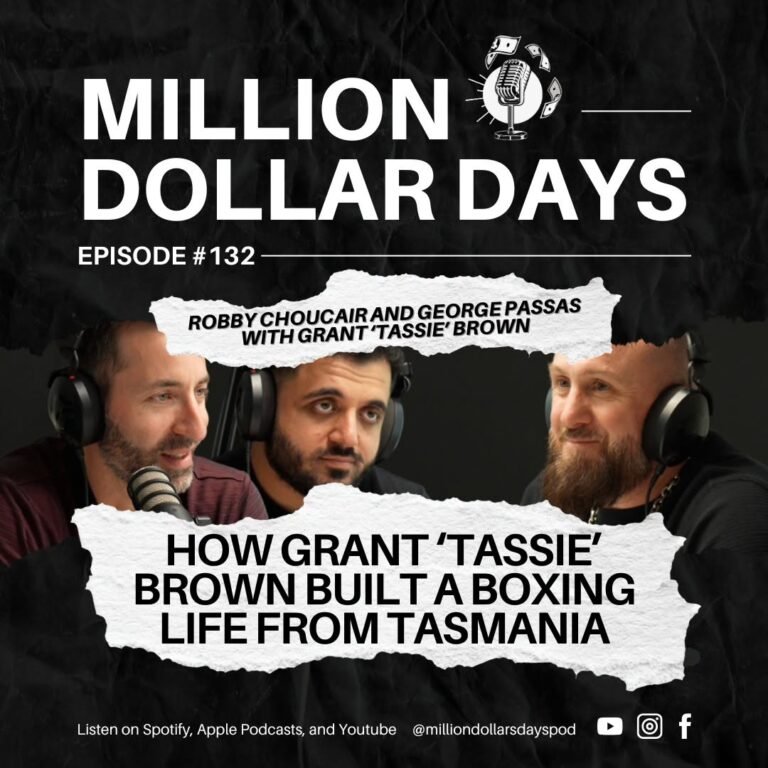
Grant “Tassie” Brown’s story is a blueprint for Australian boxing discipline and personal reinvention. Raised in Hobart with a deep family boxing legacy, he describes dinner-table debates about legends like Joe Louis, Muhammad Ali, and Rocky Marciano, then a first real gym at 13 after childhood asthma. Six months later he wins his debut at Hobart City Hall, the same venue his father and grandfather fought in. What stands out is the early commitment to training twice a day, managing weight, and choosing long-term goals over short-term thrills, a mindset that mirrors modern high-performance coaching and the best combat sports routines.
The conversation also tackles the modern fight economy: MMA fighters crossing into boxing, influencer bouts, and the payday logic behind it. Grant calls himself a boxing purist and explains why events like Mayweather vs McGregor or Tyson vs Paul feel like spectacle rather than sport, even if he respects anyone willing to step into a ring. The hosts dig into villain marketing and why figures like Floyd Mayweather, Conor McGregor, and even Anthony Mundine made fortunes by making audiences want to see them lose. It’s a sharp look at boxing promotion, audience psychology, and how entertainment value can reshape a sport’s reputation.
After retiring in 2010, Grant opens up about the identity crash many athletes face: without a fight date, motivation drops, weight rises, and depression can creep in. He connects that to the need for structure, a training camp timeline, and a reason to be accountable. He credits his parents for shaping his standards, shares the loss of his father in 2019 and his mother in 2024, and explains how grief can become fuel for purpose. That thread of resilience ties directly to boxing mindset: prepare for the worst, expect adversity, and keep moving.
Today he wears every hat in the boxing business: coach, manager, promoter, and media interviewer. He describes training fighters toward Commonwealth and Olympic pathways, running shows back in Tasmania, and traveling to America and Saudi Arabia as big money transforms global boxing. He also gets technical about weight cutting, contracts, and why missing weight is unprofessional, with real-world examples of purse penalties and competitive advantage. The episode closes on a hard pivot to youth crime and knife crime in Melbourne, with a blunt call for consequences, community pathways, and sport as an off-ramp. Grant’s offer is simple: put the weapon down, walk into a gym, and build a life worth defending.