
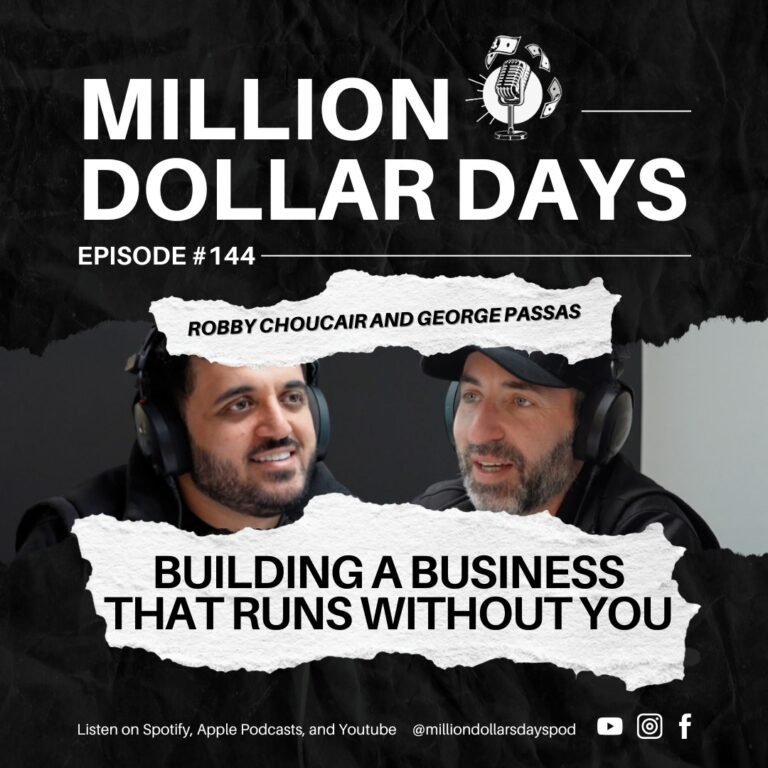
Singapore looks like a simple holiday story on the surface: a birthday trip, a quick flight, a clean city, and a ferry to Bintan Island for an all inclusive Club Med stay. But for business owners, travel is never just travel. This conversation threads together family time, the realities of running a company, and what it means to step into a true CEO role. George shares why this was his best family holiday yet: older kids who can do more on their own, more space to enjoy time with his wife, and a resort built for low friction fun. If you are researching Singapore family travel, Club Med Bintan, Sentosa Island hotels, or the real cost of an all inclusive resort, you will recognize the trade-offs: you pay upfront, then spend almost nothing, and you suddenly see how much money and decision fatigue food and logistics normally create.
The most valuable takeaway is not about the destination. It is about the moment you leave and your business keeps pulling you back. George expected some emails, but the week exposed where operations still depend on him: payroll, payments, approvals, urgent venue issues, and edge cases no one wants to “get wrong.” That frustration becomes data. It shows where the systems and processes are missing, where authority is unclear, and where the team needs training plus guardrails. If you want a business that runs without you, you need documented workflows, decision rights, budget limits, and a leadership layer that can make calls without fear. Delegation is not dumping tasks. It is building capacity so the company can function while you are away, and so you can expand into new ventures without becoming the bottleneck.
They also dig into the modern problem of never fully unplugging. Many owners feel calmer when the inbox is “under control,” even if that means working poolside, because the anxiety of returning to chaos feels worse. Time zones can help or hurt: Europe being behind Melbourne can create a clean morning work block and a full day off, while other destinations can flip that and put urgent calls right in the middle of dinner. Even the travel class conversation is practical: business lounges and comfortable seats are not just a flex, they can be a productivity tool when delays happen. The deeper point is mindset and planning: decide in advance what you will handle, what your team will handle, and how you will protect family time without creating a Monday disaster.
The episode lands on two lessons that apply everywhere: comfort zones and customer experience. Pushing kids to ride the roller coaster becomes a metaphor for bidding bigger projects and taking on higher pressure jobs. Often the fear is worse than the reality, and the process is the same, just bigger numbers. On service, George notices bland “specials” that do not feel like real sales, then praises a simple Qantas birthday note that creates outsized goodwill. That is the playbook for any small business: systemize thoughtful touches, train your team to execute them consistently, and build enough margin to absorb mistakes as part of learning. If you are a founder trying to balance work and life, the goal is not perfect work-life balance. It is work-life priority, chosen intentionally, so the business grows without stealing every holiday you worked for.