
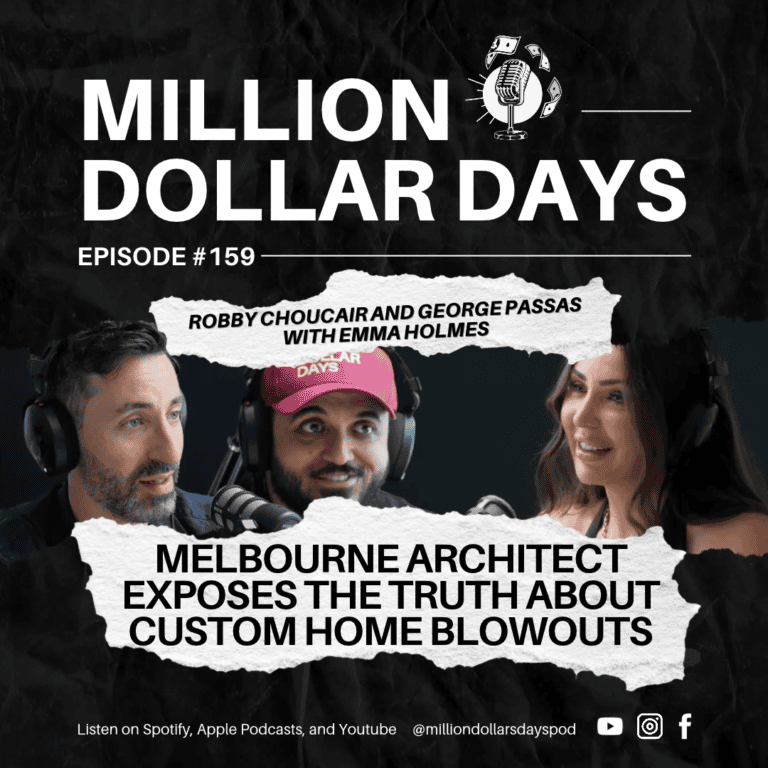
Building a custom home can feel like the biggest purchase and the biggest emotional roller coaster of your life, which is why the smartest moves happen long before demo day. In this conversation with Melbourne architect Emma Holmes of Formery Architecture and Interior Design, we dig into what actually keeps residential architecture projects on track: trust, clarity, and realistic pricing. Emma shares how a boutique architecture studio can create work-life flexibility with a hybrid model while still maintaining accountability, and why that same principle applies to clients and contractors. When the right expectations are set early, a “dream home design” stays exciting instead of turning into a stress spiral.
A major theme is documentation and the hidden cost of uncertainty. From a builder’s perspective, vague drawings lead to assumptions, variations, and conflict, even when nobody is acting in bad faith. Emma and the hosts talk about value management as a necessary part of construction budgets, but they push for a better version of it: value management without sacrificing design intent. The key is spending enough on high-quality architectural documentation, coordinated consultant inputs, and clear details so pricing is based on reality, not guesses. That upfront investment can prevent the classic scenario where clients approve a concept for a “$2M build,” add wish-list items like a pool, and then discover the real number is closer to $3M.
Early Contractor Involvement (ECI) is another practical lever for controlling risk. Instead of waiting until the end to ask builders to price a fully formed design, Emma prefers early conversations with reputable residential builders to test assumptions, understand market pricing, and keep the project buildable. That collaboration helps avoid late-stage redesigns, rushed “VM” rounds, and the heartbreak of a project getting canned. The episode also highlights how good outcomes come from team formation: architect, builder, engineer, planning, geotech, and other reports aligned early, with fewer surprises downstream. Just as important is personality fit and communication style, because a build is a long relationship, not a one-time transaction.
Decision changes are inevitable, so the process matters. Emma explains how she manages revisions by doing deeper briefing upfront, reducing option overload, and charging for major scope shifts that trigger knock-on effects like engineering updates and planning resubmissions. She also frames the architect as both taste maker and client advocate, especially during construction when stress spikes and progress can look invisible. Finally, the conversation turns to AI in architecture and small business: use AI for templates, admin, and repetitive tasks, but keep human judgment for design, client trust, and authentic communication. For architects, builders, and homeowners alike, the takeaway is simple: clarity plus collaboration beats chaos every time.