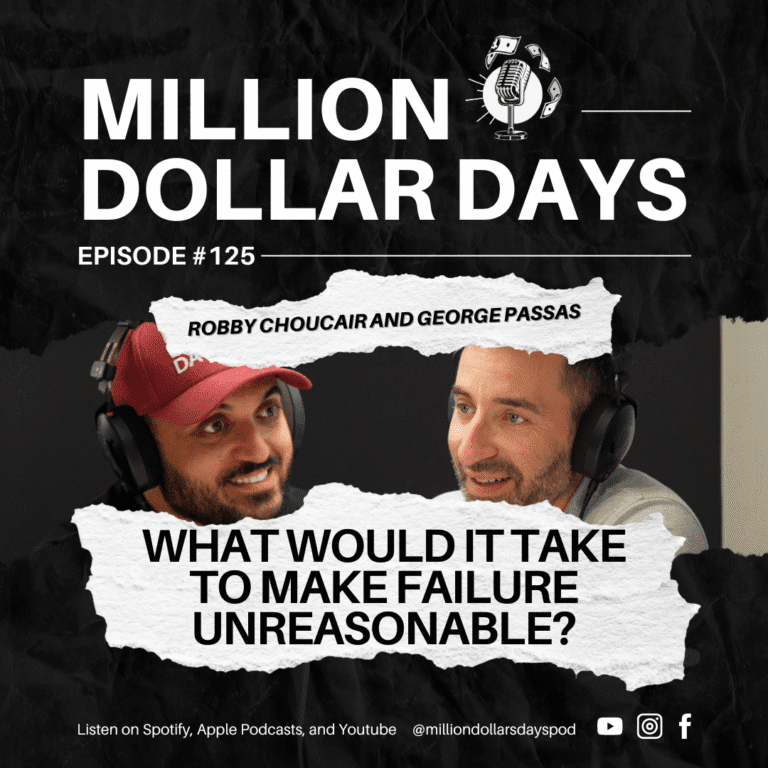
Elite is not a podium, it is a standard you choose every day. That standard runs through sleep, health, work, and the way you show up for family when you are tired. The conversation starts with something simple: waking up clear because you slept well. From better sleep flows better focus, steadier emotions, and consistent performance. But clarity meets challenge fast. Robby and George recap their biggest Builder Summit yet, where registrations topped 500, and just over 100 people arrived. Data made attendance predictable, but predictability sparked a harder question: what would it take to make success so likely that failure becomes unreasonable?
The answer is never just money. Money amplifies a message, but it cannot replace craft. They tested creative ads, on-site filming, and a door prize, then compared outcomes with the numbers they now trust. Attendance forecasting became a science, yet the deeper constraint was motivation and friction. Free events attract interest without commitment, so minor obstacles become deal-breakers. Without skin in the game, people choose the path of least resistance. That pattern likely mirrors their lives: where else are they not showing up—at work, with health, with family? The hosts push this mirror back on themselves. If you want 200 people in a room, list every lever that moves that outcome: guest caliber, confirmation calls, time, city, incentives, narrative, and then decide what you will do until it is unfair to lose.
This thread leads to a broader pursuit: define elite. Is it dominance in one lane or excellence across all of life? One host argues for multi-domain mastery: health, wealth, relationships, brand, discipline, while another notes that “elite” must be measured by what you value, not a stranger’s scoreboard. Either way, self-awareness sets the boundary. You can own choices, but you cannot control other people. You cannot be a 40-year-old rookie pro, and you should not take blame for what is truly outside your reach. Ownership is choosing fast corrections: hire, assess, and fire when needed; refine processes; remove frictions; and align your actions with the finish line you actually want to cross.
Health anchors that alignment. Clean eating, strength training, mobility work, and tracking intake turn vague goals into visible changes like less pain and more range of motion. Health fuels presence, confidence, and momentum. The hosts contrast elite branding with elite behavior: sponsorship speeches mean little if your habits say you are ignoring your body. Pick your hard. Being unfit is hard. Training is hard. You pay now with discipline or later with loss of freedom. They use that frame across life: get deliberate with parenting, initiate the board game, call your parents, invite the family walk. Presence starts before someone asks for it.
Perspective sharpens presence. Imagine your 80-year-old self gifted 24 hours in your current body. You would cook breakfast with your kids, hug your partner longer, call your mother, and ignore your phone. That thought experiment reframes ordinary time as scarce time. From there, the hosts drift into technology and nostalgia—analog childhoods becoming digital lives, and return to one practical edge: reduce distractions that hijack attention. Email is often someone else’s agenda. Boundaries, like turning off notifications or batch-checking, defend the work and relationships that matter. To close, they circle back to the first principle: start with health because it multiplies everything. Then build. Choose a lever, commit, and keep stacking wins until it is unreasonable for you not to succeed.